
Supply Driven vs Supply Management
Inflation Influences - stop conflating supply (including imports) and supply management

Supply Driven and Supply Management
This note summarises some thoughts on supply-driven inflation and supply as compared to supply-managed agricultural products. One is dominantly driven by foreign prices. The other is managed domestic food prices that may be influenced by foreign-priced inputs such as fertilizer or feed. However, supply management contributes stable prices and quality to our consumption picture.
Supply factors are important throughout the CPI. Chen and Tombe found that:
We find that nearly 90 percent of Canada's accelerating inflation since the second quarter (Q2) of 2021—when quarterly inflation, by our measure, first exceeded 3 percent—is from supply-driven price increases. We also demonstrate that much of the increase is accounted for by energy-intensive goods and services and by those that are disproportionately imported. This is a challenge for monetary policy, which largely affects domestic aggregate demand rather than supply.1
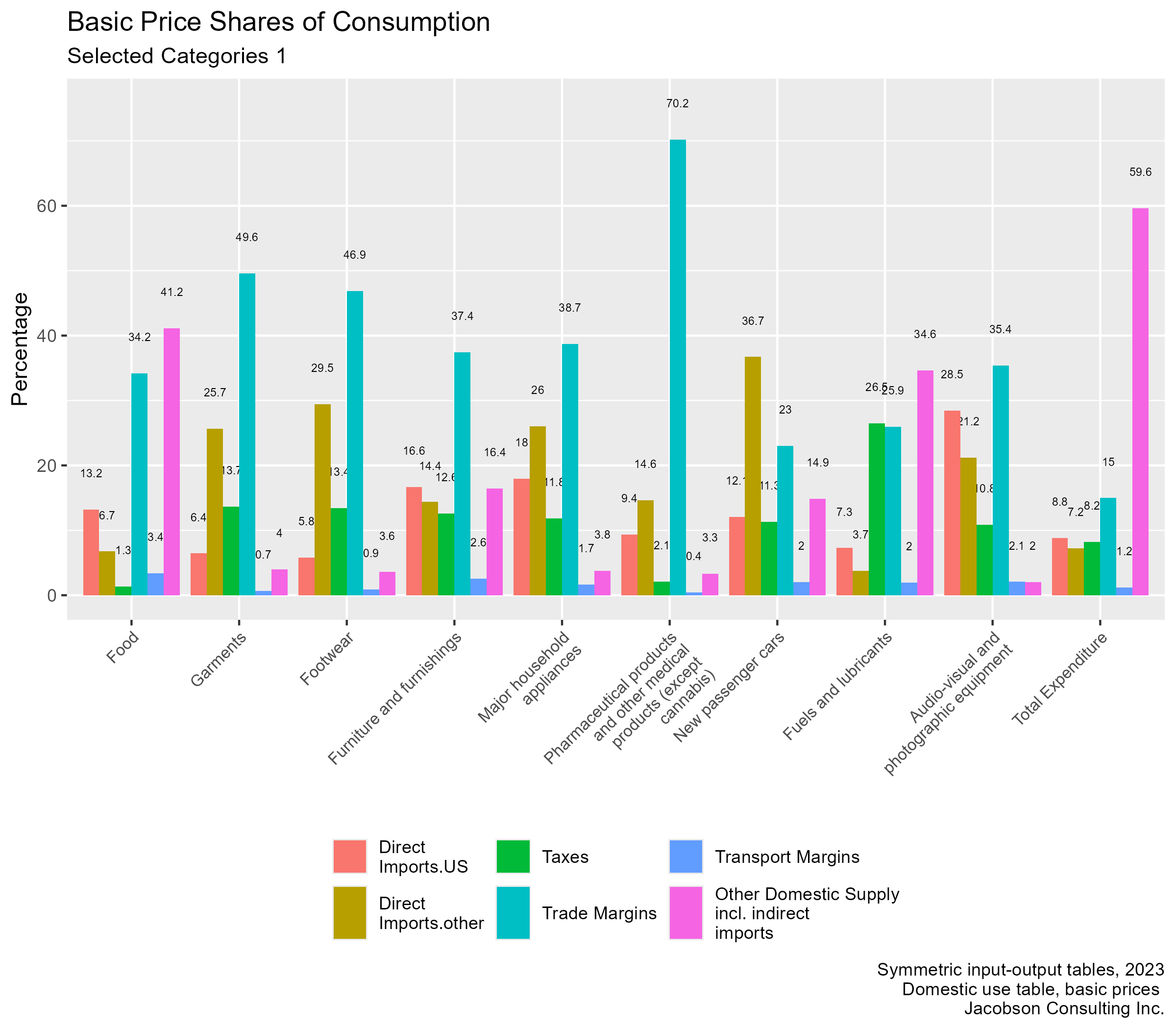
I have summarized the relative roles of imports in a substack based on input-output data. https://pauljacobson.substack.com/p/consumption-shares-for-2023-of-imports
This chart shows the import shares for some key products. This focuses on direct imports. Indirect imports are included in other domestic supply. In this edition of my analysis, I have partitioned the direct imports in US and ROW for 2023.
In a paper presented in Vancouver, the Bank of Canada noted that supply matters as much as demand but that monetary policy typically focusses on demand management.2
Supply management of agricultural products provides stability of domestic supply nd quality and enables producers to manage issues of foreign input prices.
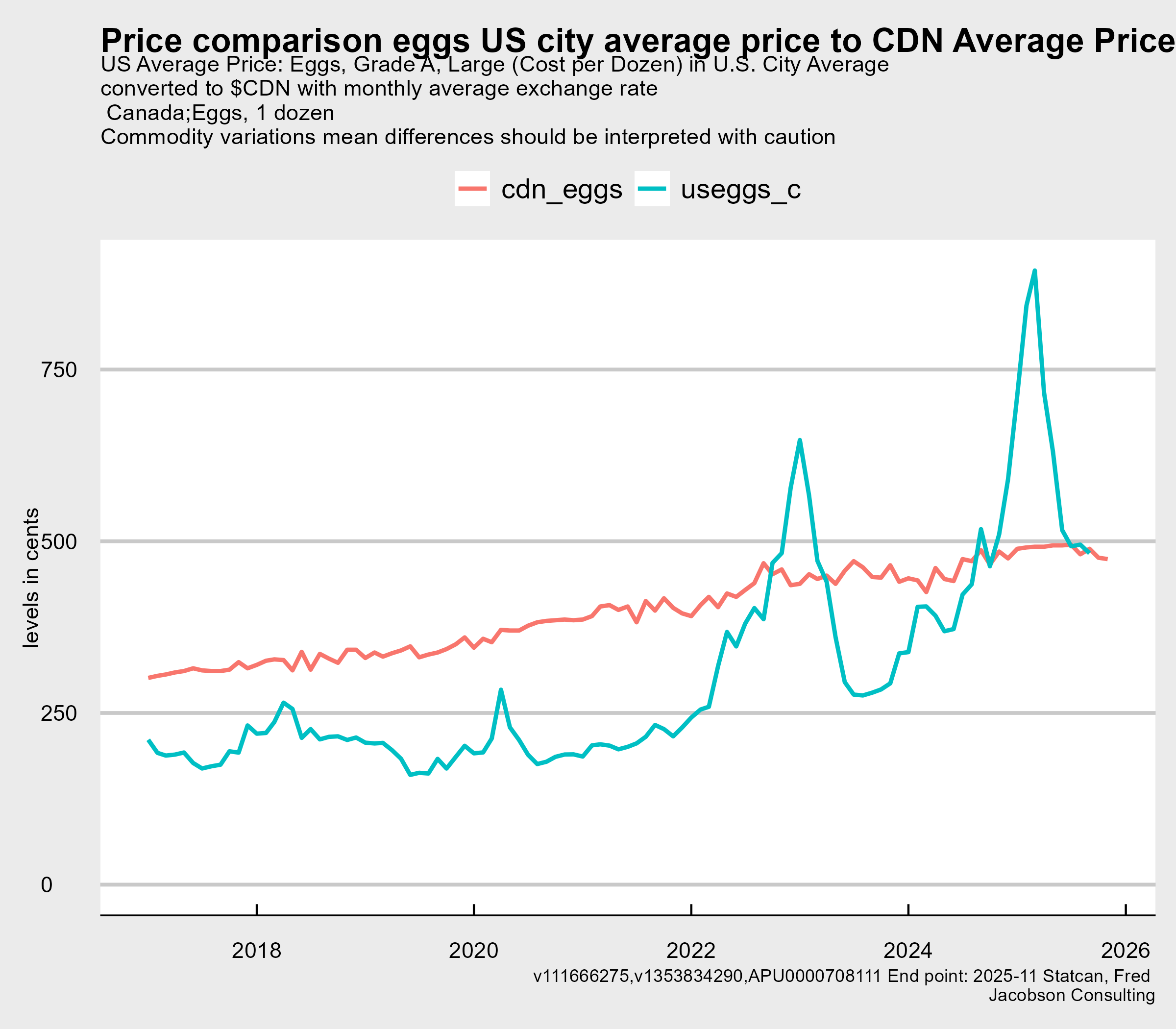
Supply management for milk prices was outlined by me in a substack. https://pauljacobson.substack.com/p/milk-prices-in-canada. Egg price management was reviewed in a companion substack. https://pauljacobson.substack.com/p/an-eggy-tale
The next chart compares the growth rates of milk prices in Canada and the US to show the difference between stable management and the more complex US approach.
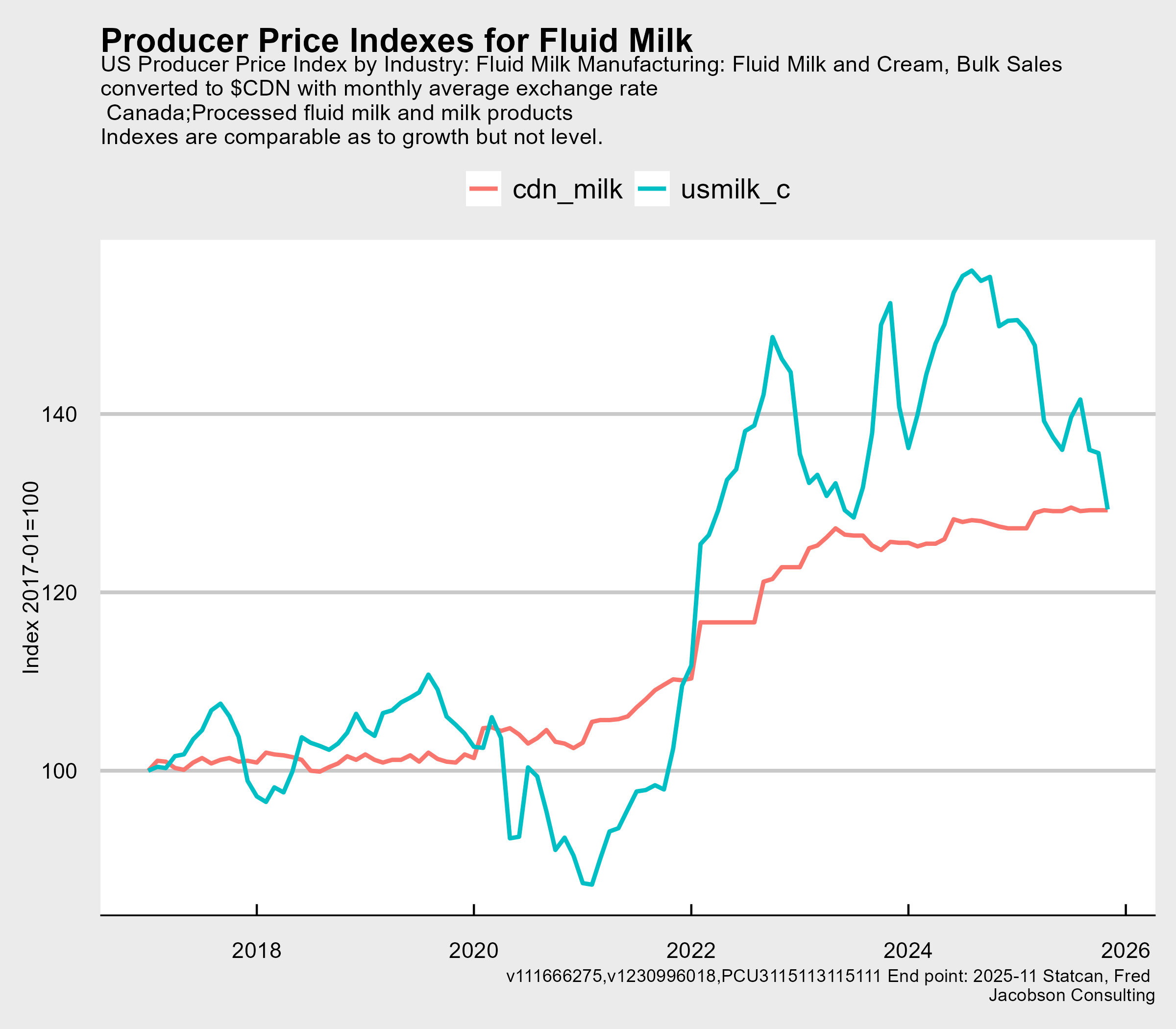
The differences in levels are discussed in my substack. Similar analysis can be done for eggs. For that commodity, the management of bird flu has been critical
Concluding Comments
The important point is that the supply inflation is not easily manageable by direct monetary policy intervention. The supply management of agricultural products gives us stable prices and quality. The two influences should not be conflated by talking heads. Destroying our supply management system will not get us benefits which exceed the costs.
The Rise (and Fall?) of Inflation in Canada: A Detailed Analysis of Its Post-Pandemic Experience
Yu Chen and Trevor Tombe
Canadian Public Policy 2023 49:2, 197-217
I know this is not the issue you are dealing with in this paper, and perhaps you have addressed my question in your other work on supply management, but does the system not tend to disincentivize innovation and productivity improvement? Stable prices are good, I suppose, but what about the longer-term impact of stifled competition?