
Labour Force data through 2026-06
Growth trends are weak in the near term.

Headline
We should be grateful for the vast array of data products supplied by StatCan. My notes discuss what interests me this month and does not substitute for the Daily. The latter emphasizes national employment (and unemployment) rates which are useful summaries but the regional and sectoral results are what matters.
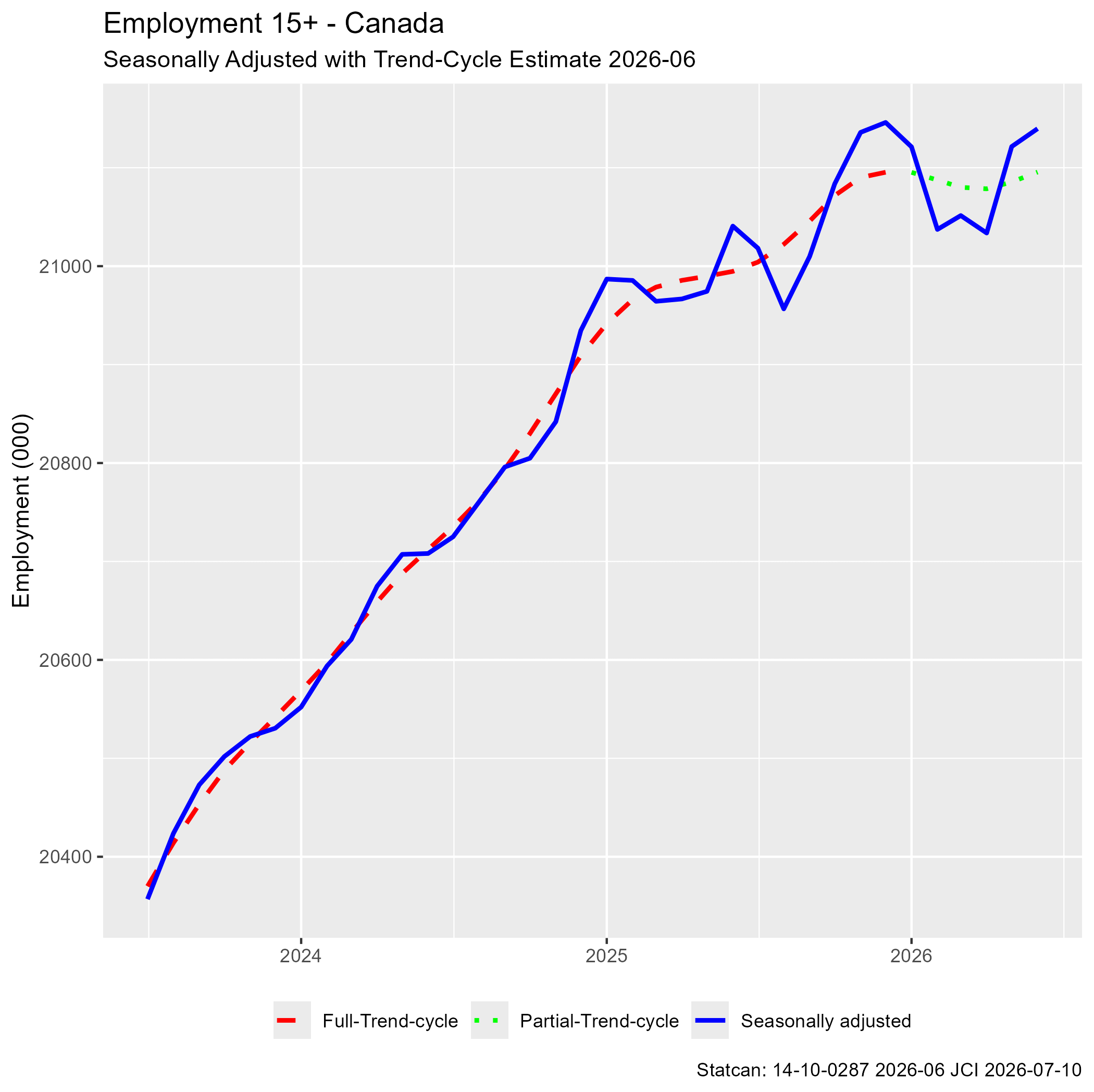
We are just oscillating around a base level. The trend really is what counts.
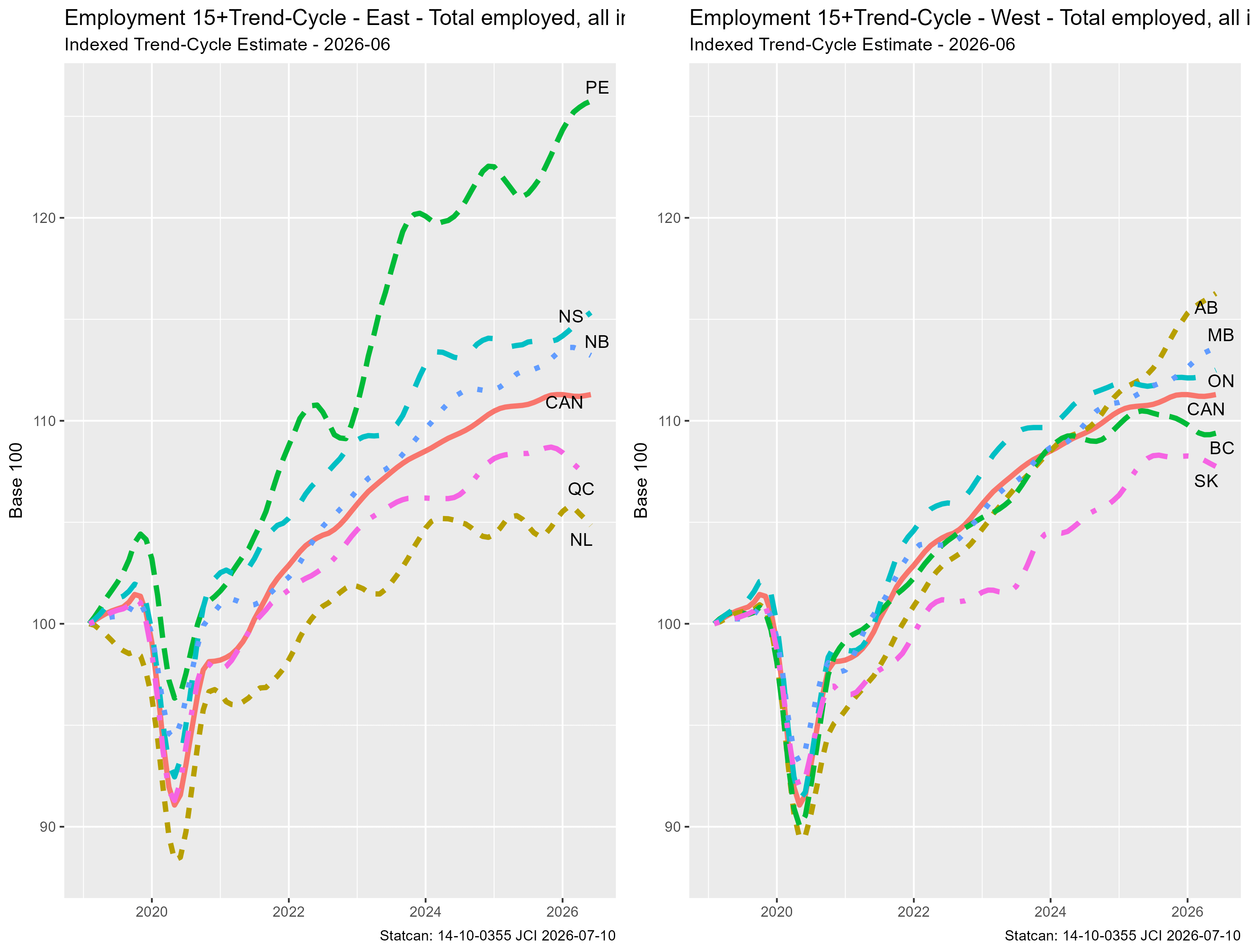
The trend in eastern Canada has not been as strong as in the western half.
It is useful to compare the trends in just the service sectors.
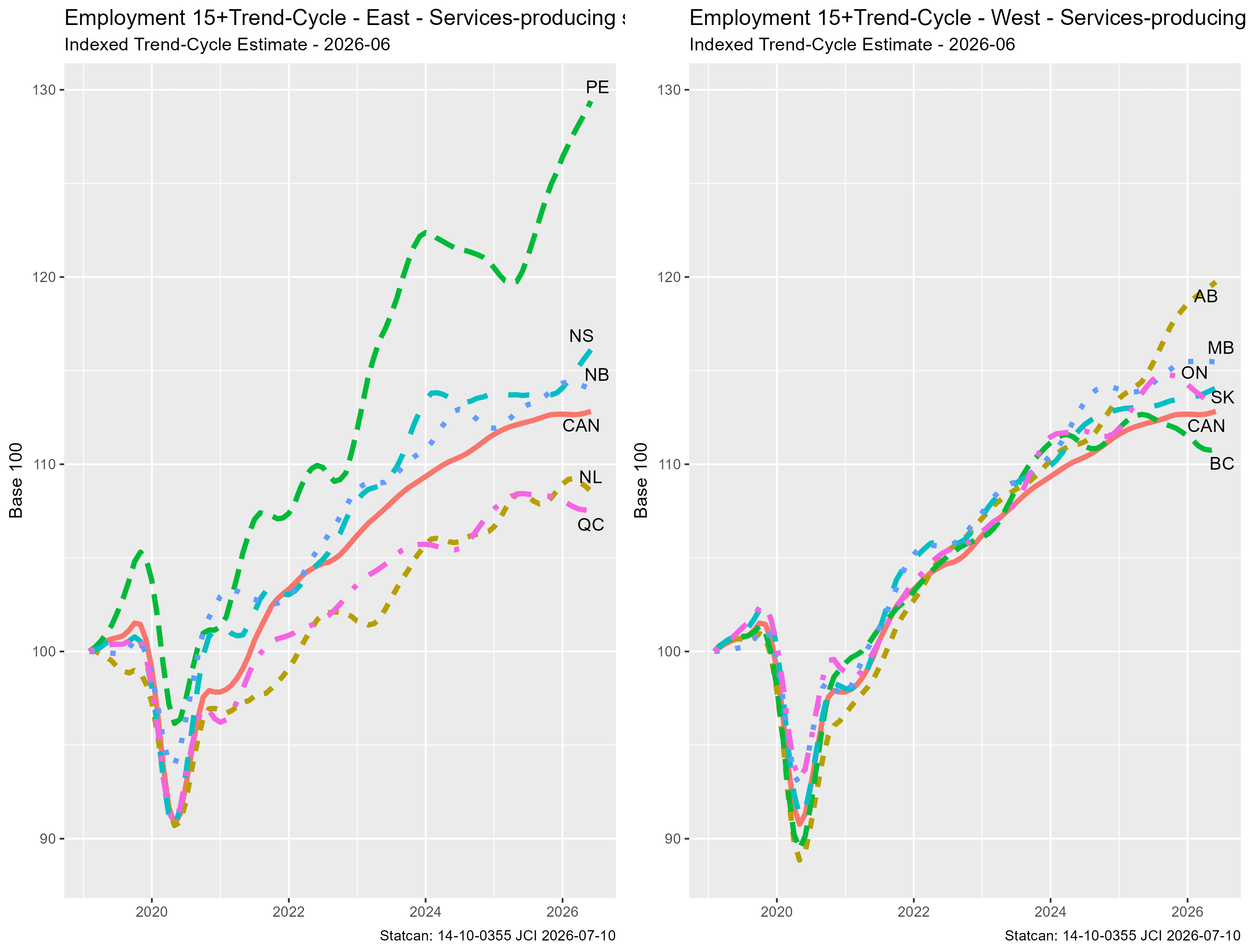
The western plots show a much stronger consistency of pattern but AB heads north and BC heads south suggesting ties to resources and investment.
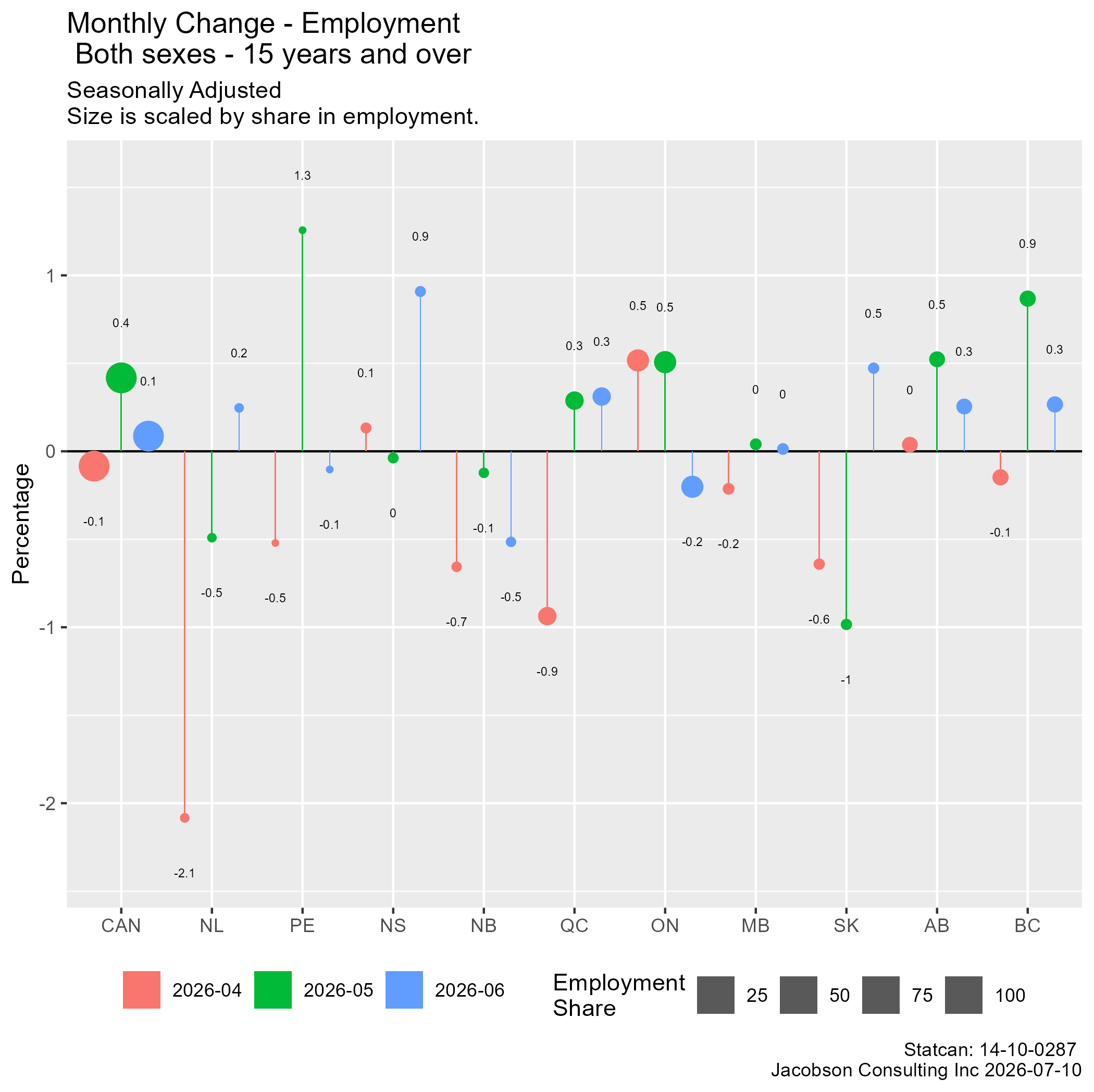
The growth rates are not strong and are oscillating. Possibly the monetary policy setting is in the way.
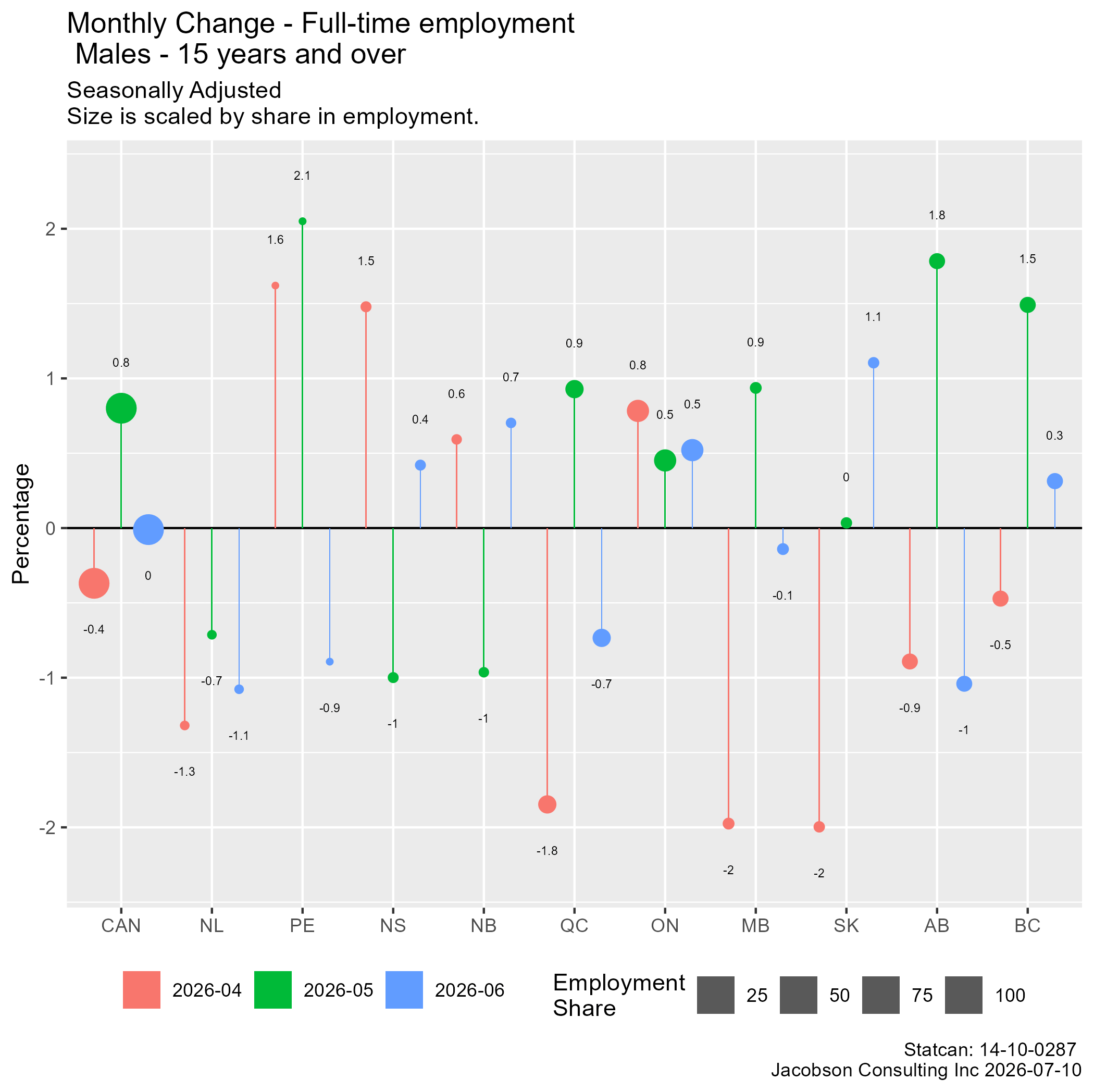
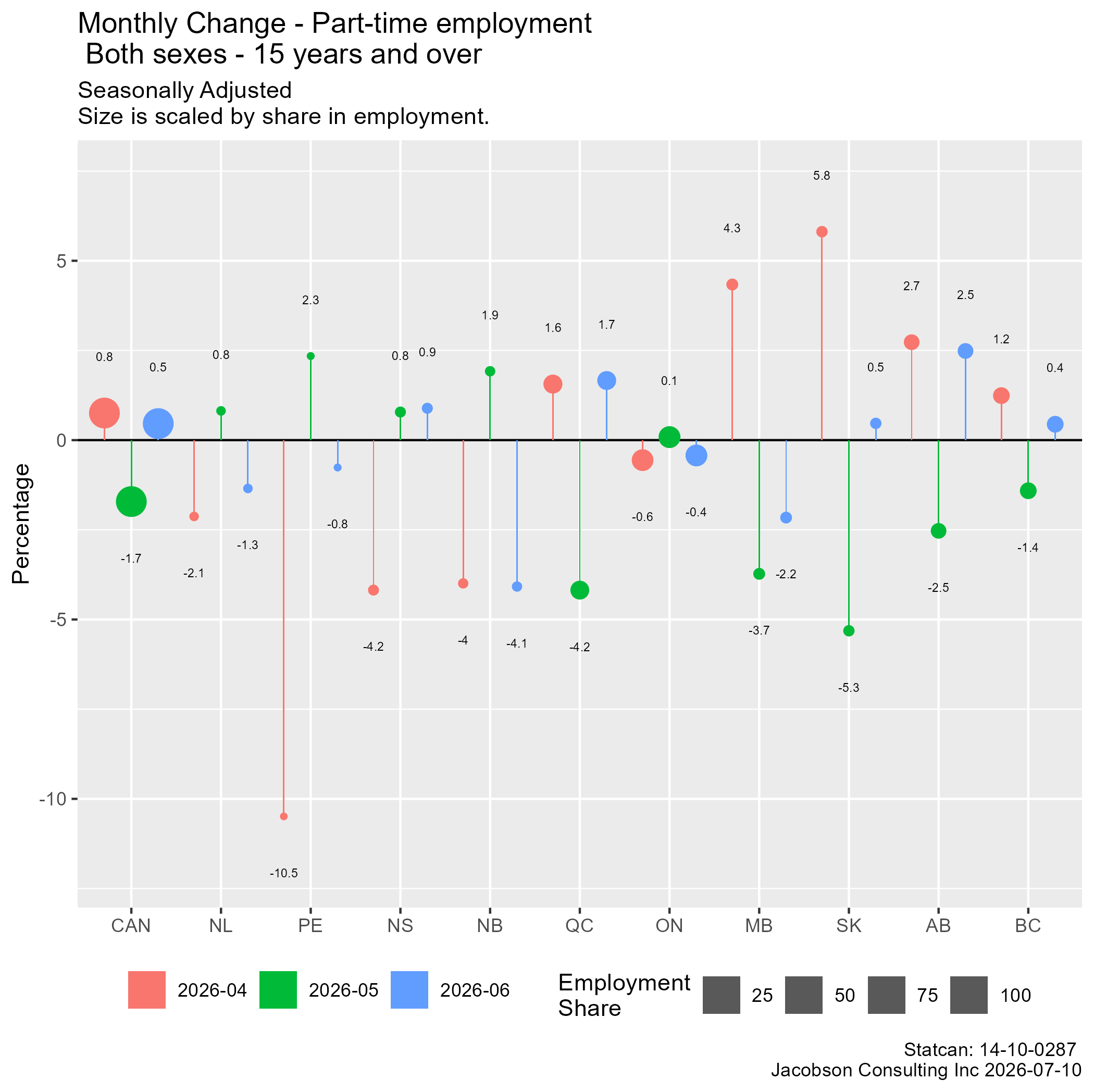
Full-time growth is strongest in ON but very weak elsewhere. IMHO this is not a strong picture.
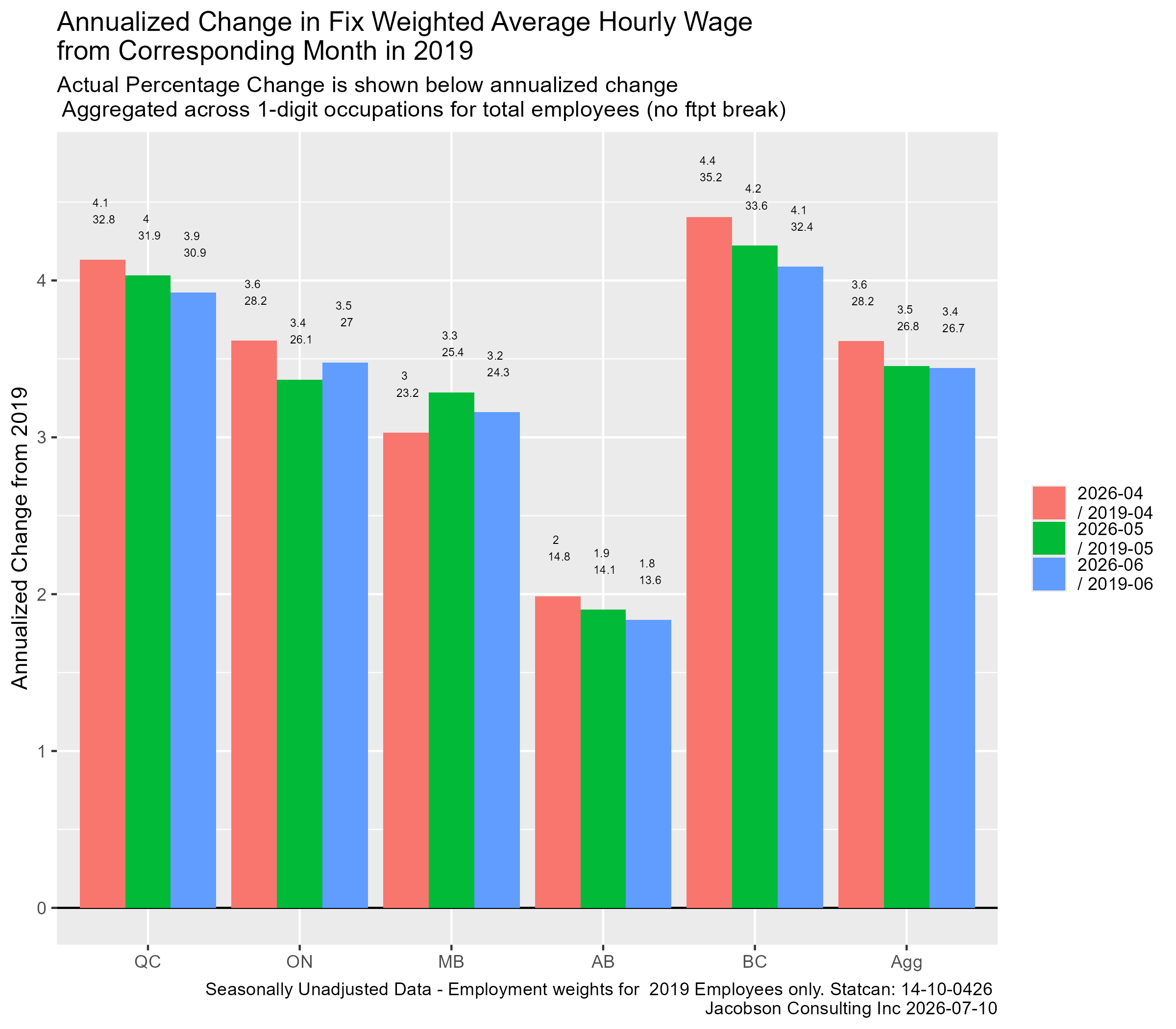
There can be no case made that wage growth is pushing anything. If we adjust the wage rates on a fix-weight-by-occupation basis, there is no evidence of wage growth.
Industry Employment Change
Labour markets are broadly defined by sectors within regions. The detailed charts show the differences.
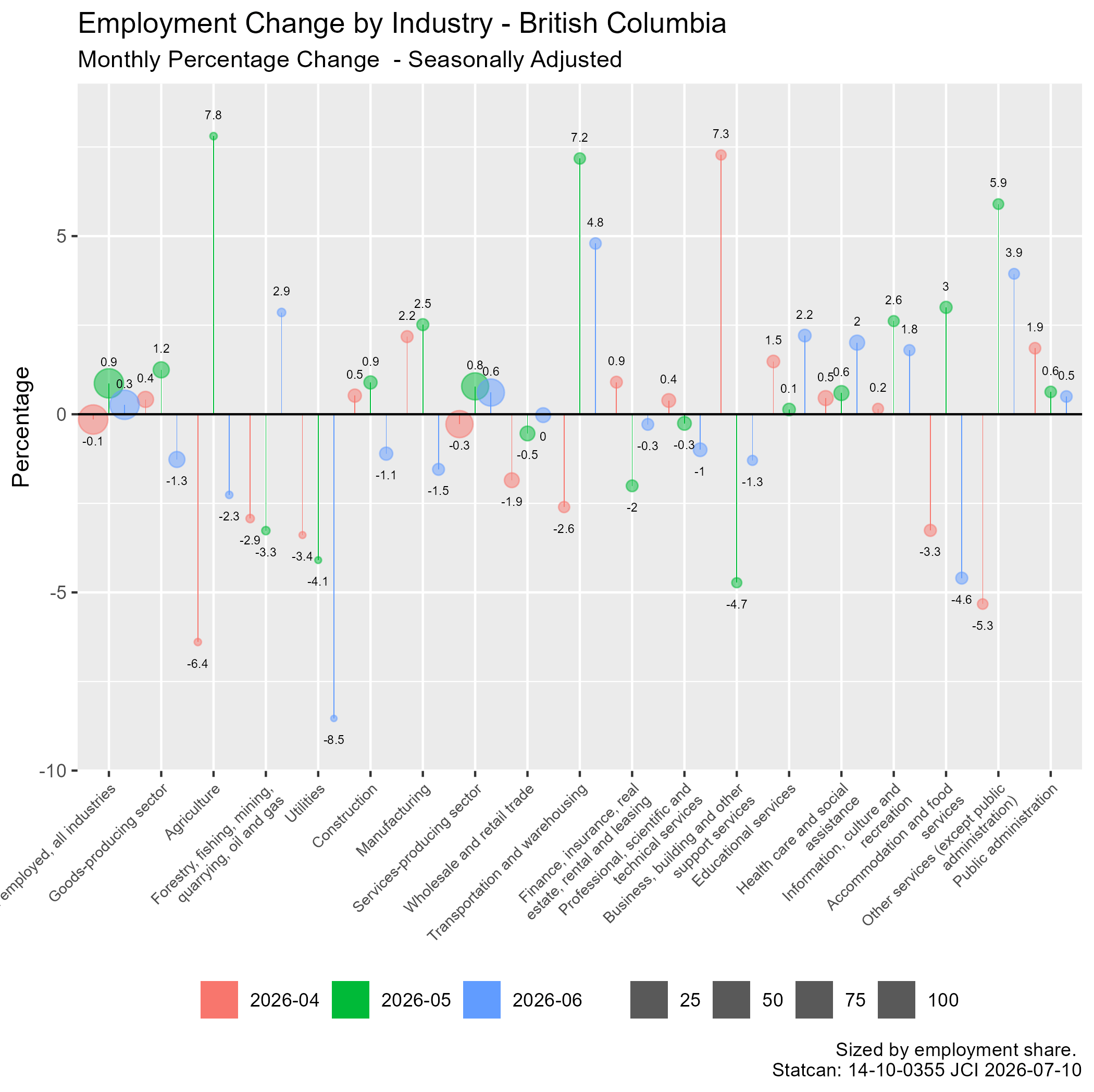
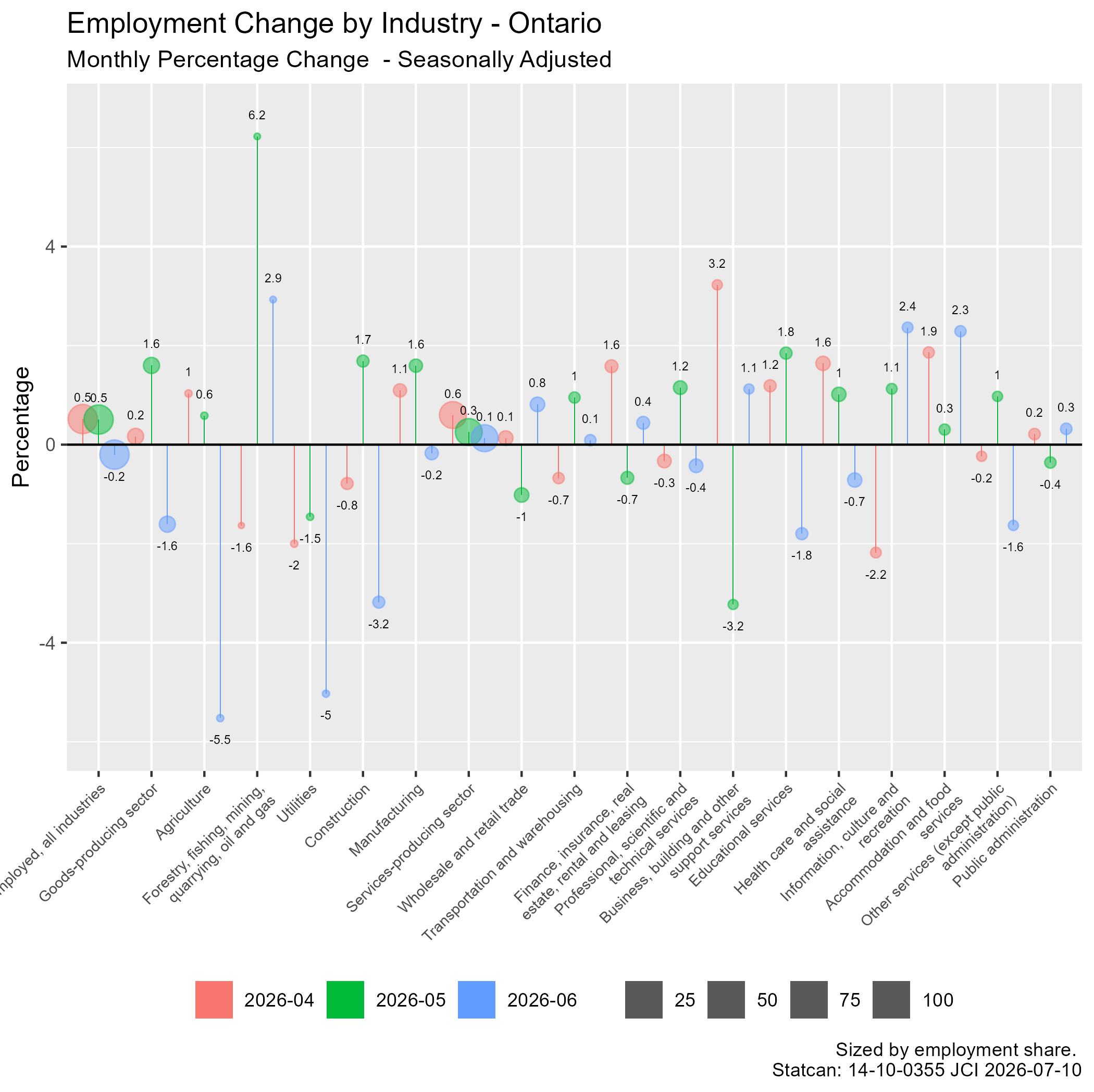
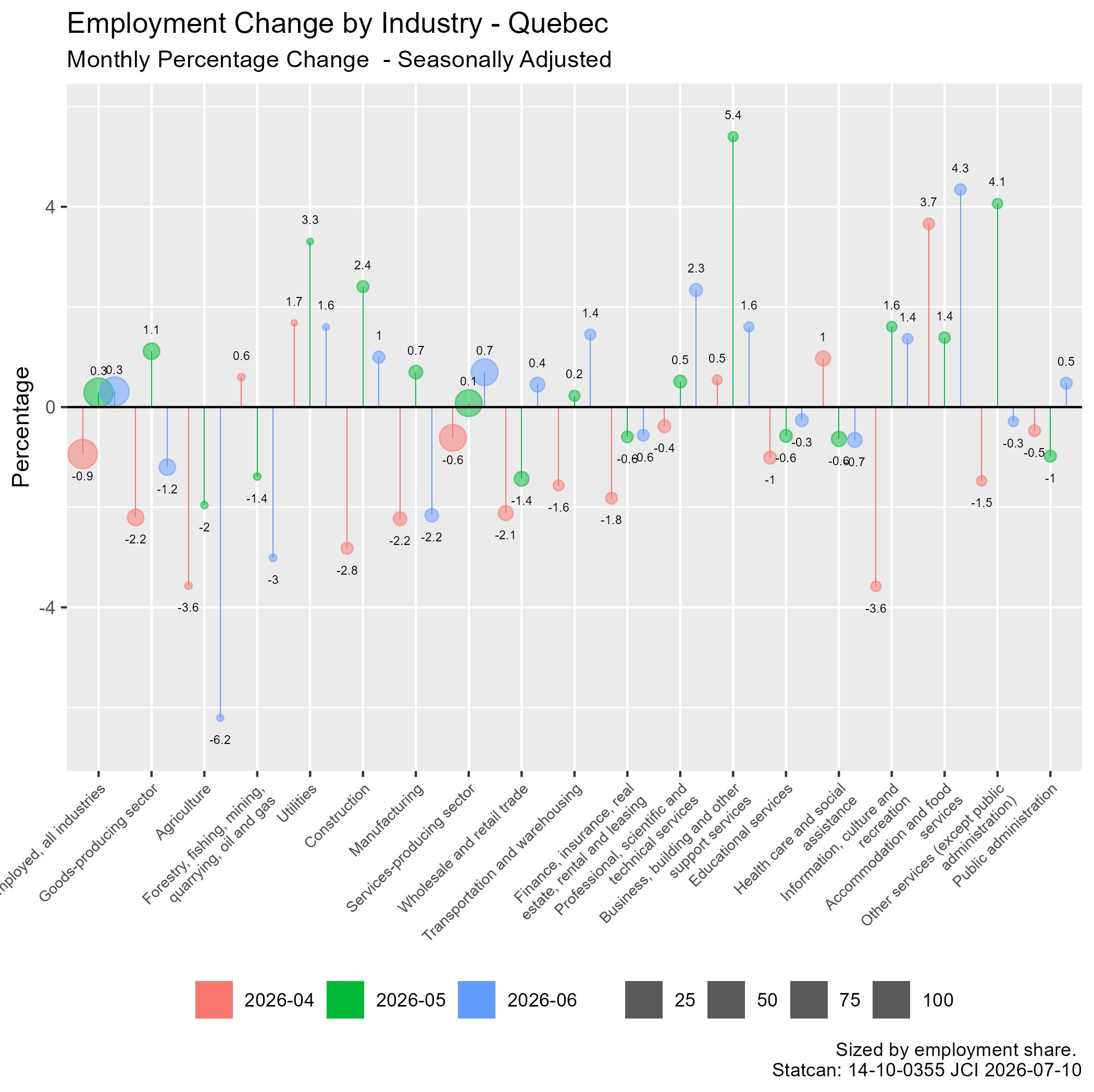
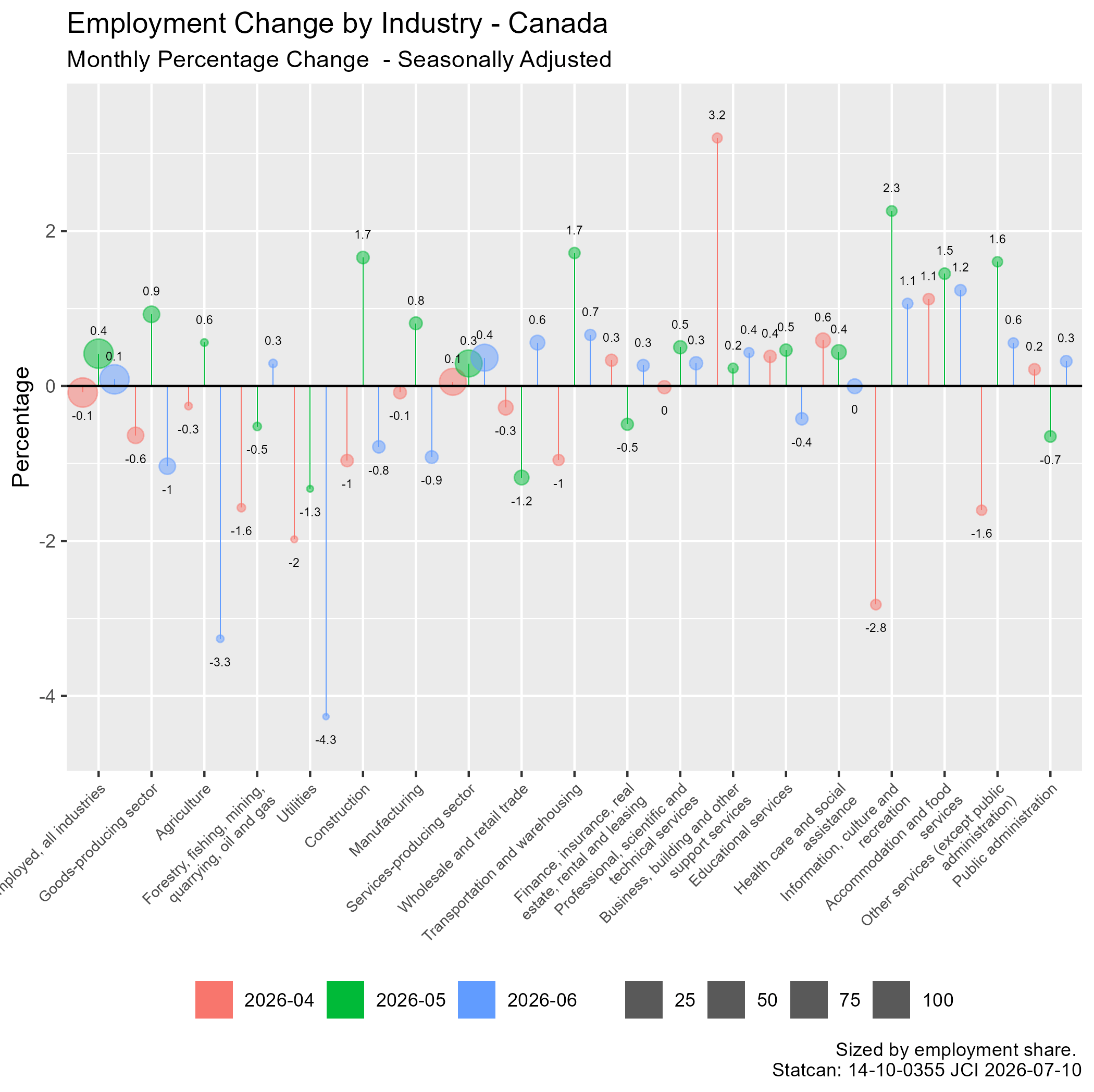
Service growth is weakest in ON relative to the other larger provinces. Retail trade growth is oscillating but stronger in ON than QC. Similar charts are available for all provinces in the detailed charts.
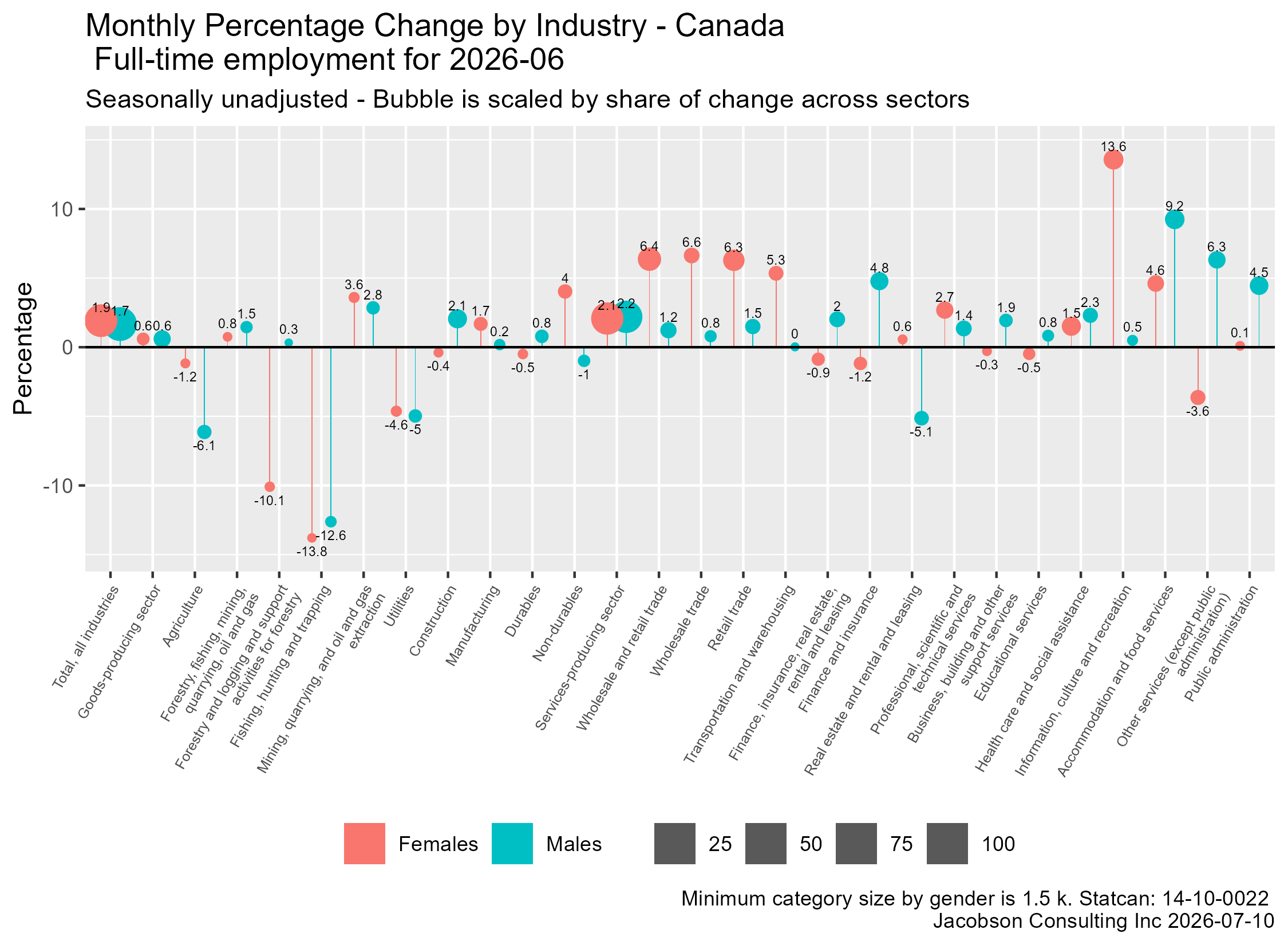
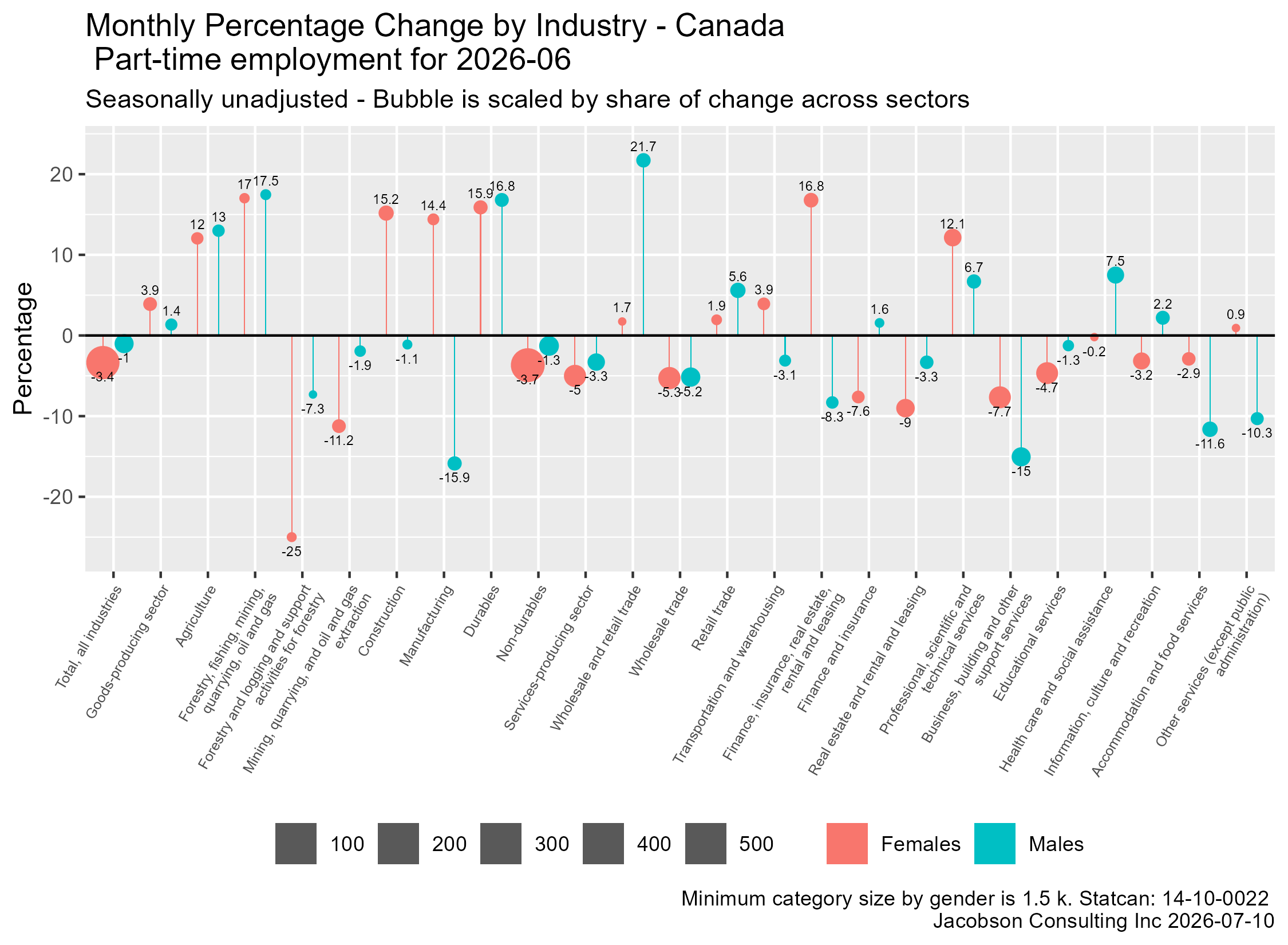
Part-time weakness is particularly noted for females in the services sectors.
General Thoughts
Other research has shown the dominant effect of supply and import factors for consumer inflation. There is no indication of wage pressure. There are lots indications for weakness. It is not clear that monetary tightness would help the economy.
Detailed Charts
AI is not used/ Charts and ideas are the responsibility of Paul Jacobson