
CPI - 2026-03
War impacts may be an issue in the short run

Headlines
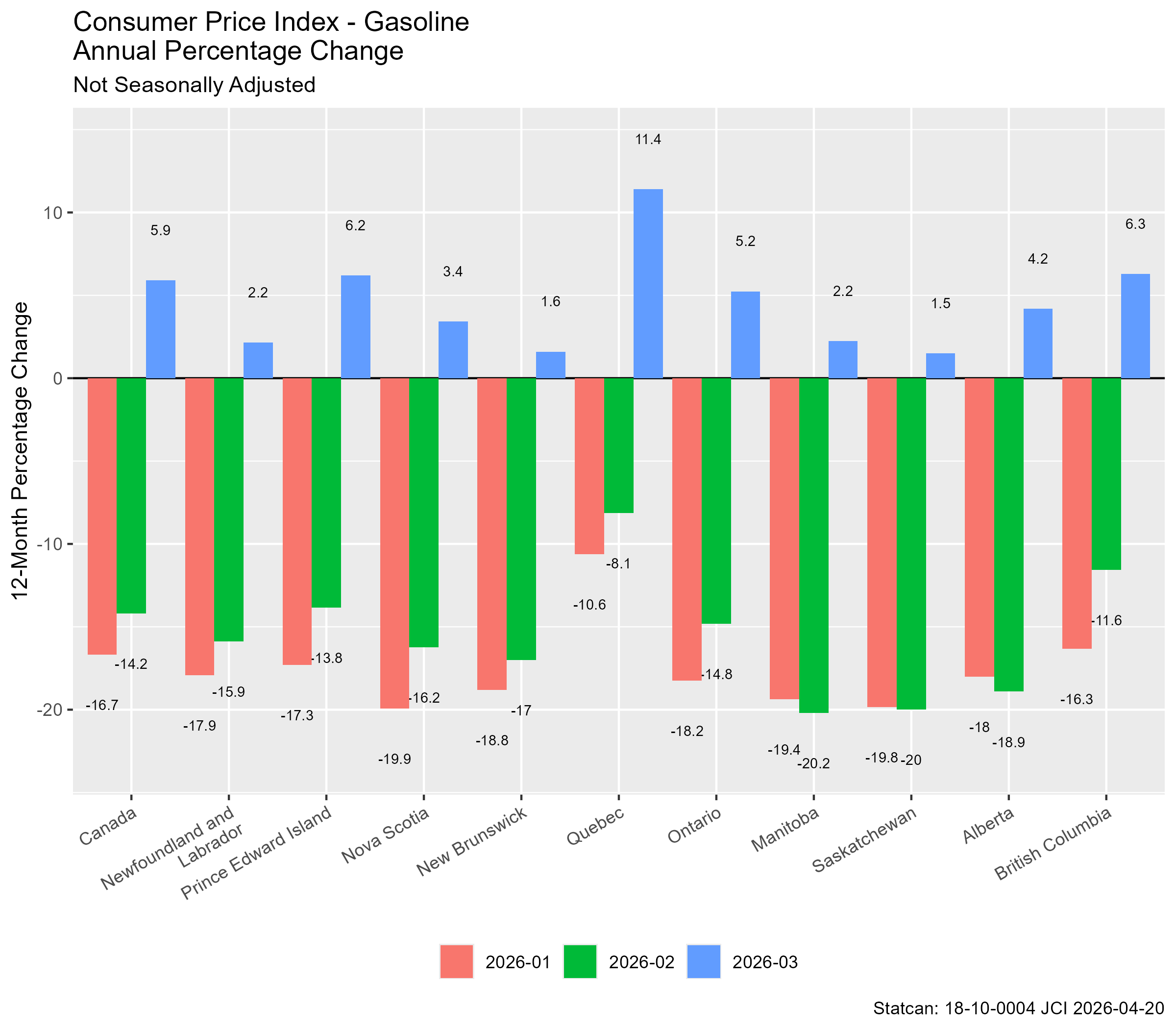
Huge war-related energy price swings are a big part of the 2.4% y/y aggregate price change. Because of the strong foreign- and supply-price influences in the consumer aggregate, the starting point issue exaggerates the swings. In the chart below, we see that energy prices shifted from a -9.3% in February to a +3.9% kick in March.
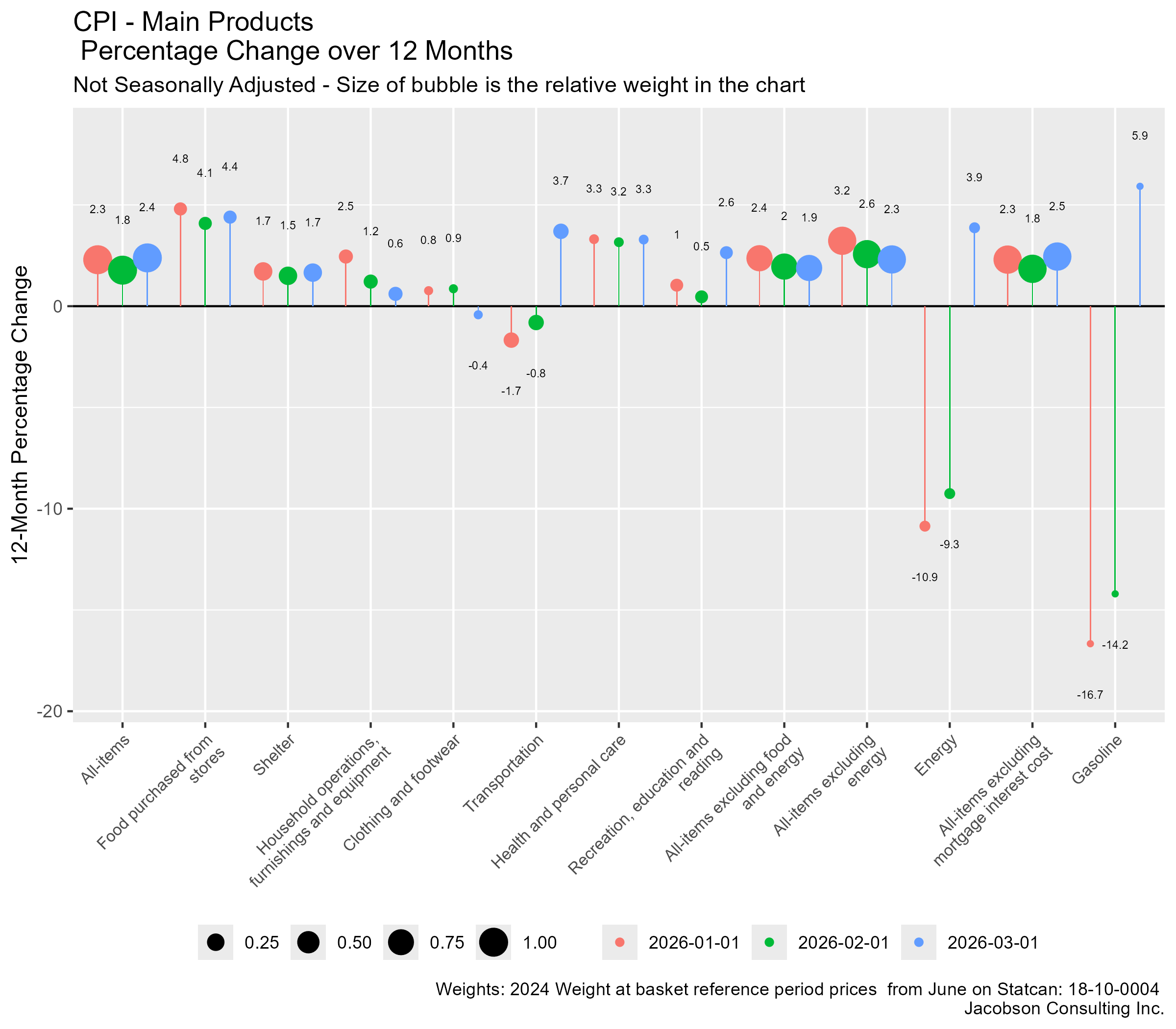
Excluding energy, the annual price change continues its slow descent moving from -3.2% in January through 2.6% in February to 2.3% in March.
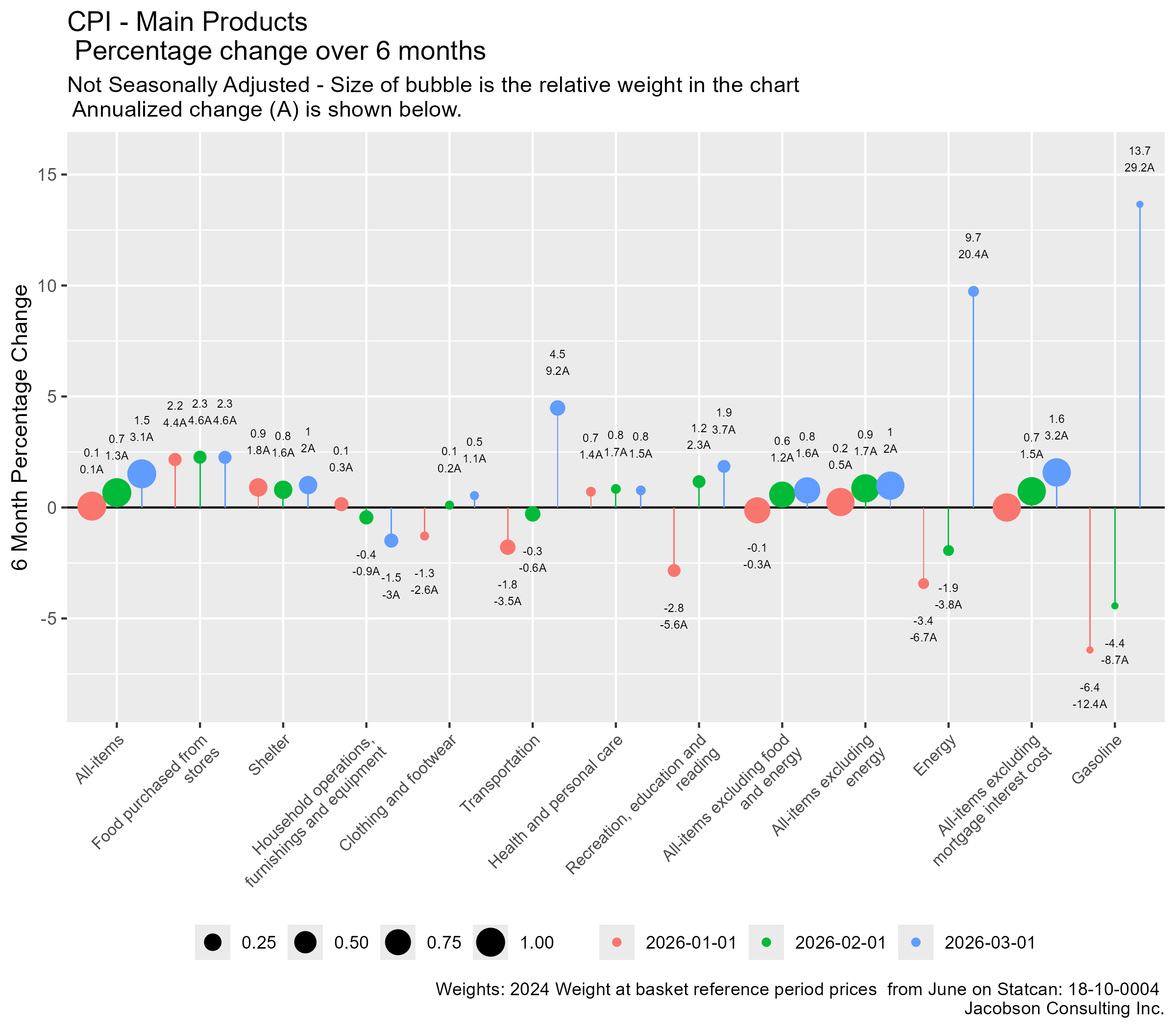
The starting point influence is shown in the 6-month chart as the annualized ex-energy rate moves up from 0.5% through 1.7% to 2% in March. Some of this comes from the residual of the HST pause that ended in 2025-02. The Daily emphasizes gasoline prices but the world-price effect on energy moves the broader aggregates. The Daily also mentions the removal of the consumer carbon levy which will impact price change through the April 2026 measure.
The impact on transportation prices can be seen in the detailed charts with a big blip to an annual change of 3.7% (p19)
Recent non-energy price changes have not been a large issue. Household operations prices (lots of imports) have not been rising.
Housing Detail
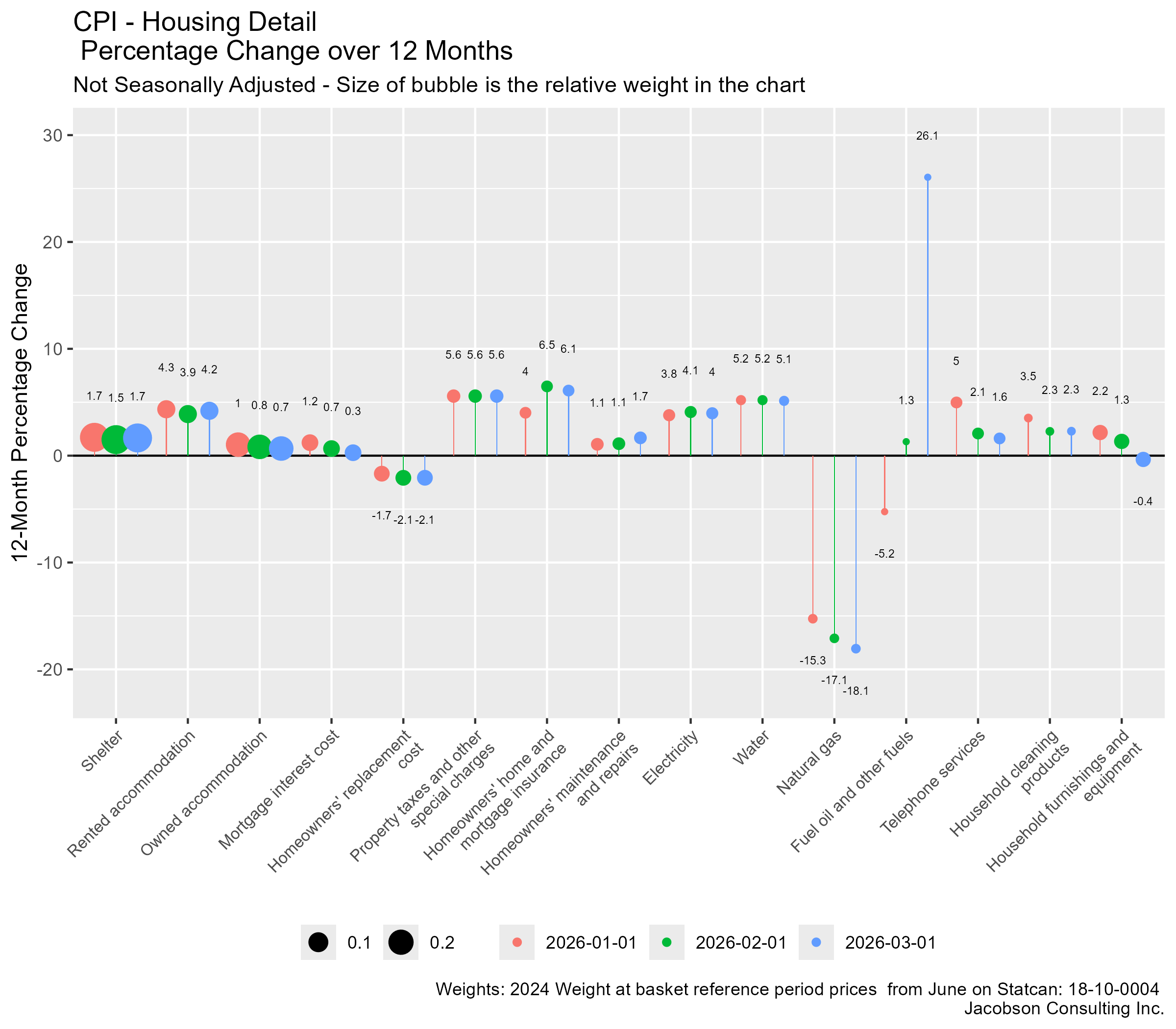
The moderating effect of domestically-produced natural gas can be see in the chart below.
Food from Stores
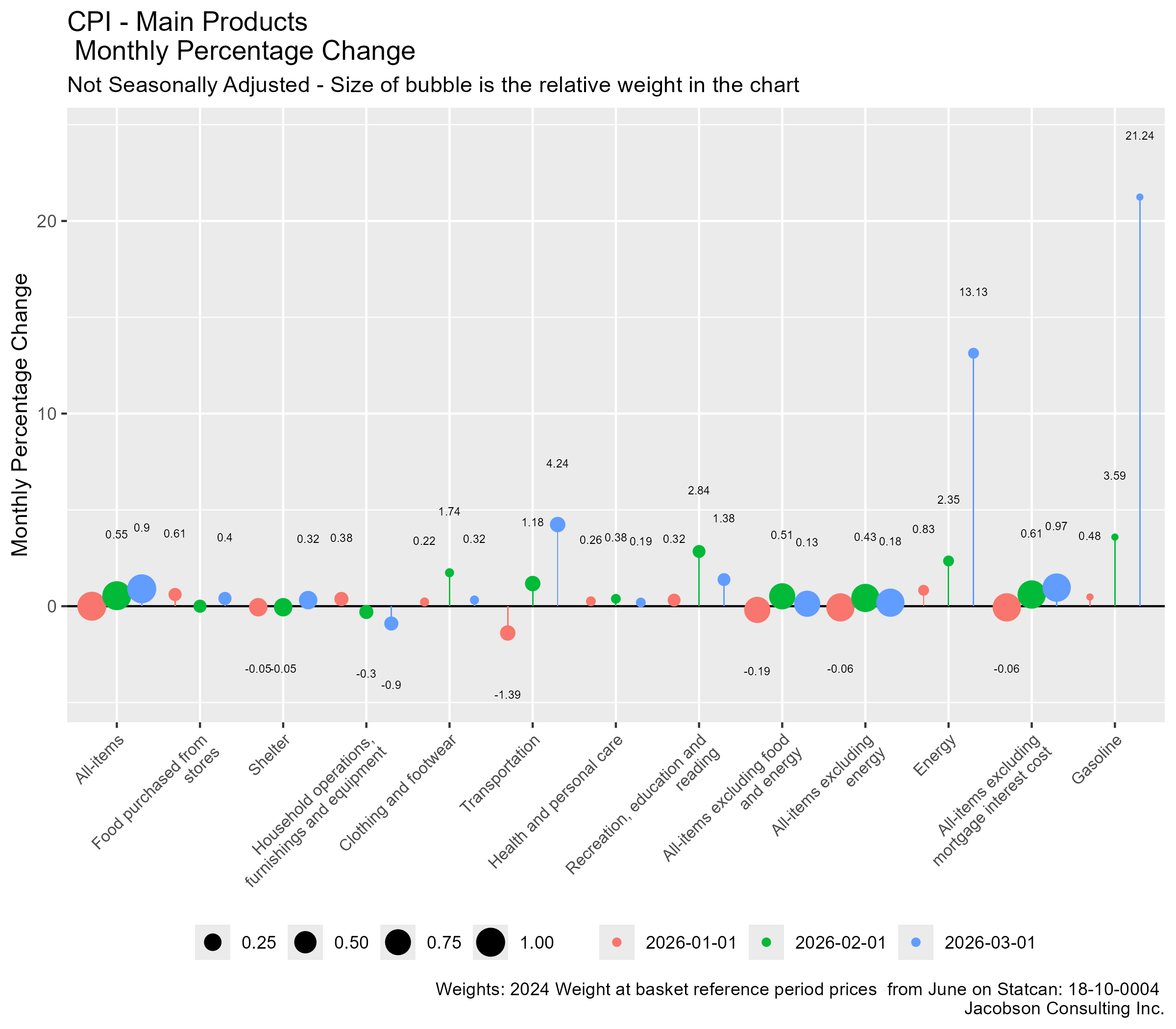
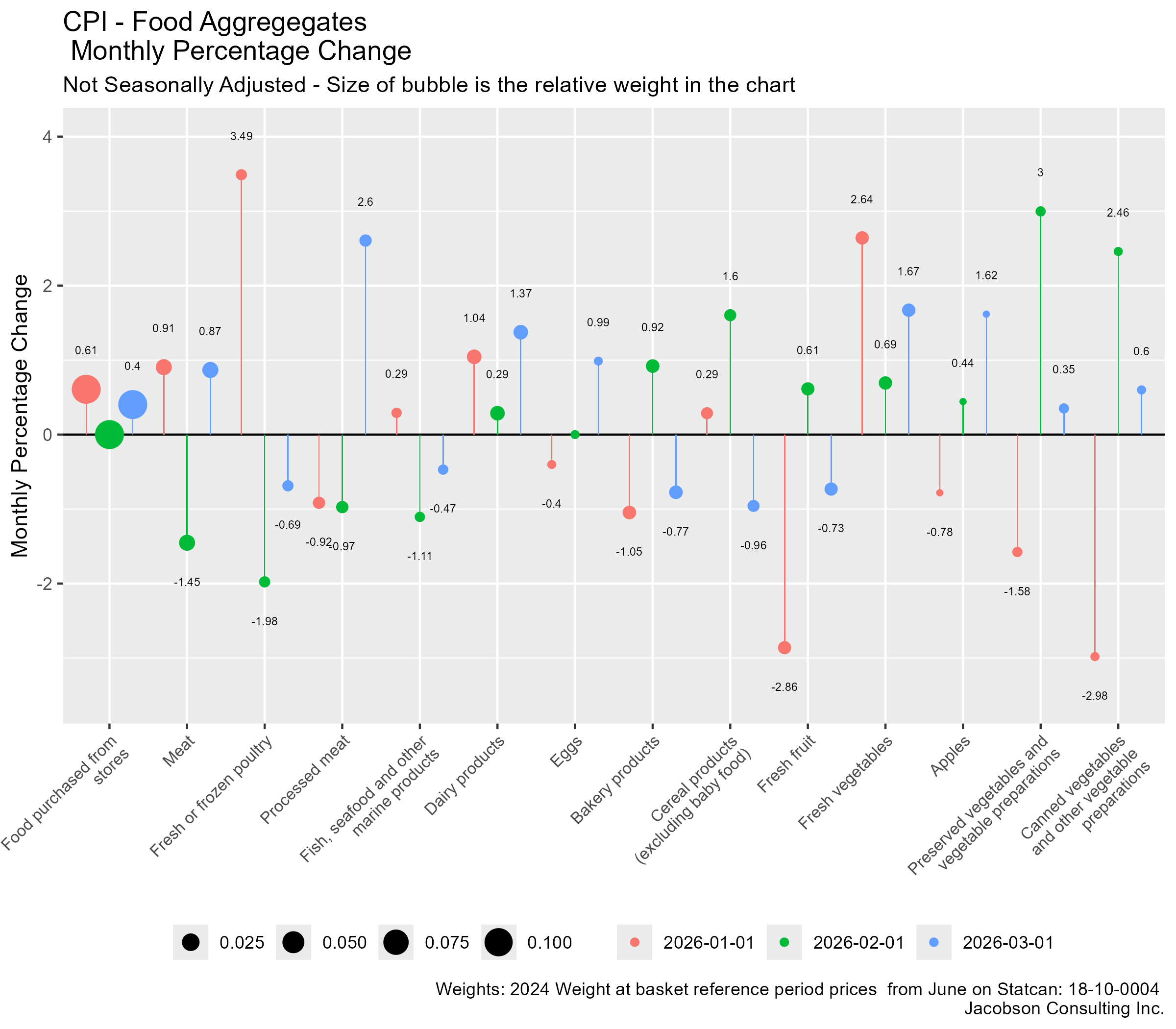
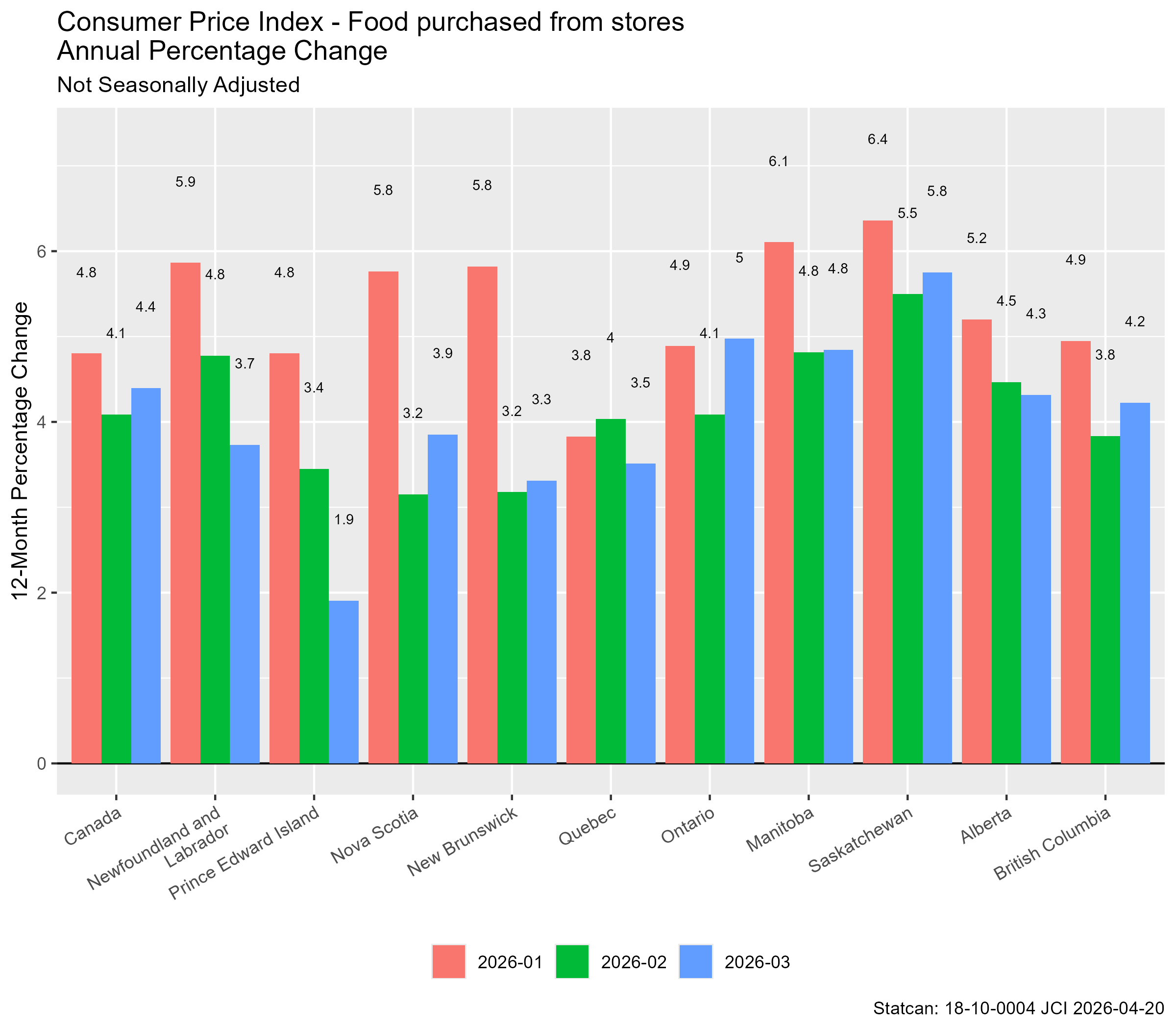
The monthly volatility is significant because because of supply-price issues for fruit and vegetables and the timing of price adjustments for dairy.
Service Aggregates
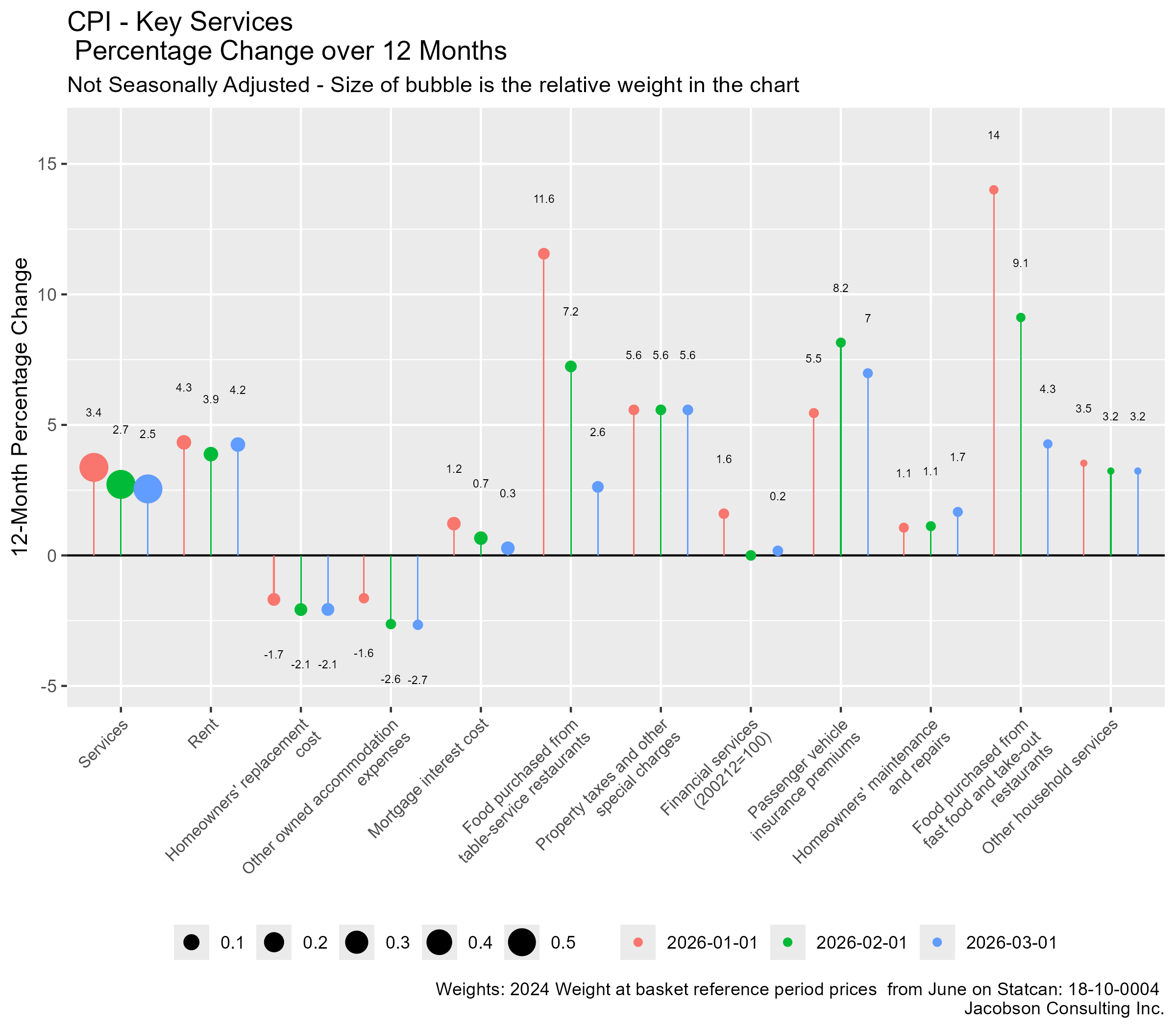
Base-period effects from the HST game affected the growth of restaurant- and fast-food-purchased food prices which are part of the services aggregate in the CPI. Also note the property-tax and vehicle-insurance premium effects in the services category.
Regional Prices
Regional inflation impacts are not identical. The next two charts show the 12-month picture for the all-items aggregate as well as one excluding food and energy. Note that Ontario’s price change is slightly lower than that for other larger provinces.
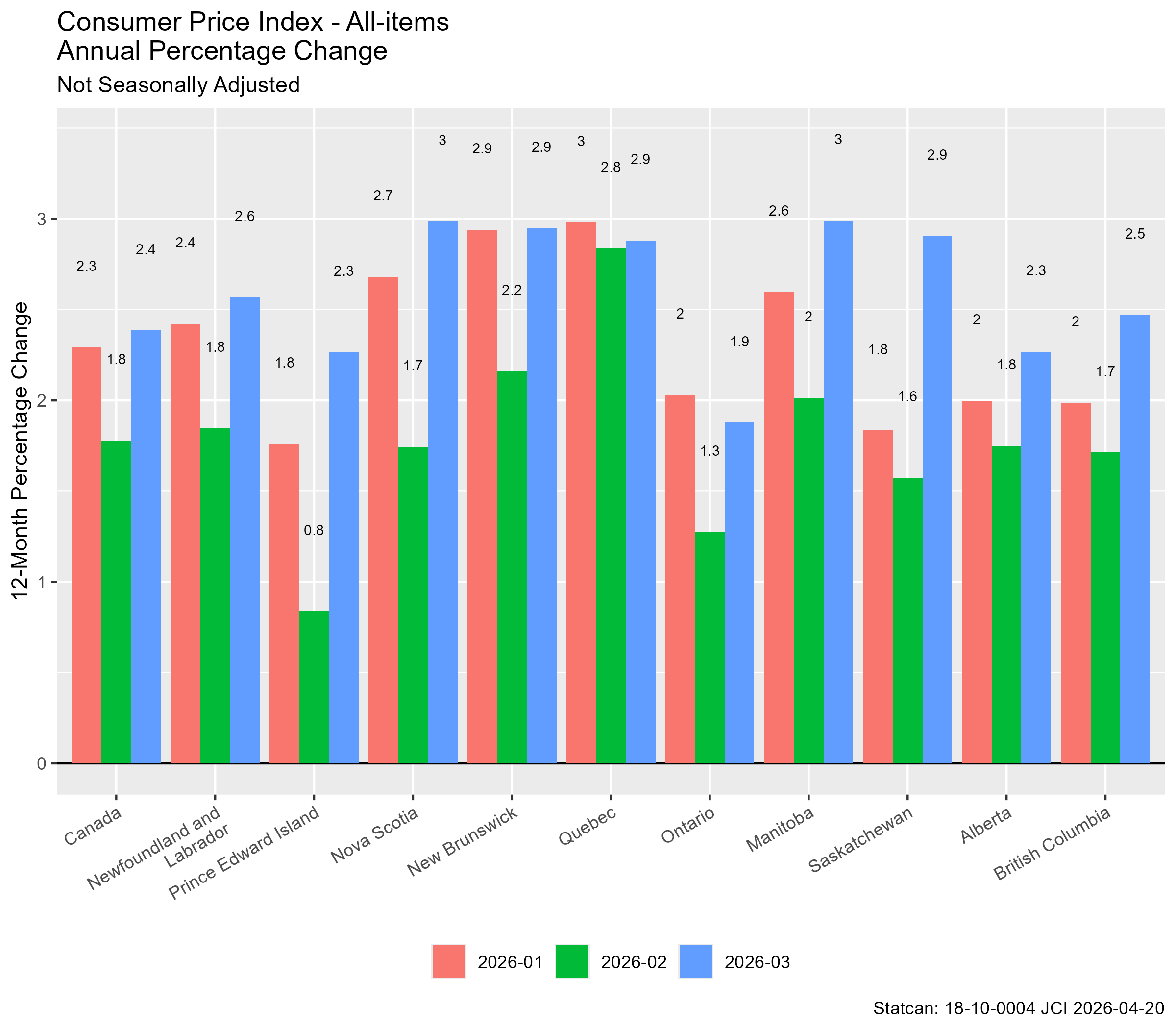
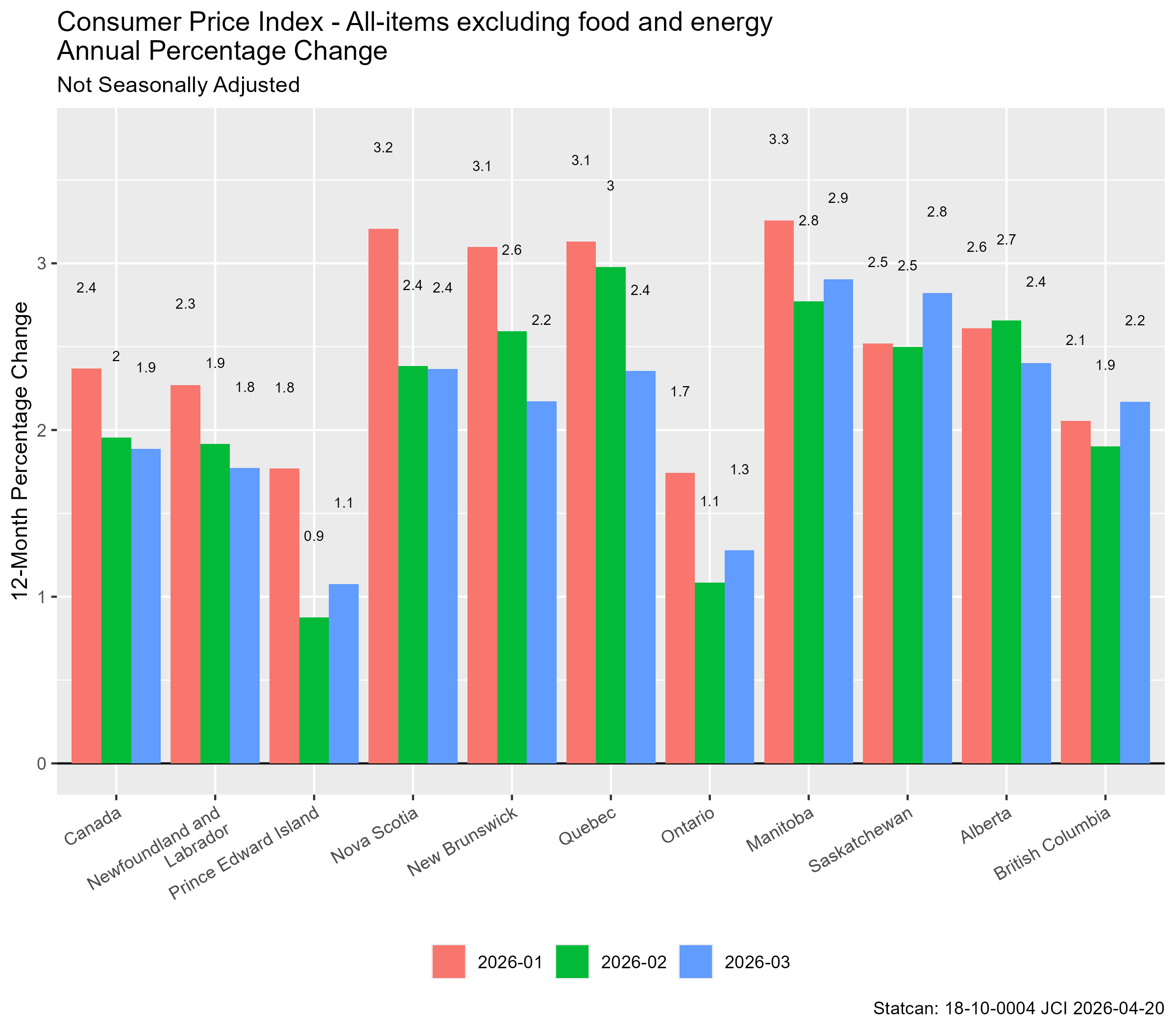
Regional competitiveness in the distribution system may be one of the factors that affect the price change for energy and food.
Moving Forward
The price impact story is not finished. The big influences are foreign prices. Domestic margins are not really a factor unless an absence of competition facilitates margin expansion. The scope for monetary tools to manage some of these issues is not clear (at least to me). Distribution costs will rise but their exploitation by retailers to expand margins should be limited by competitive pressures. The effectiveness of those pressures should not be assumed.
Read the Daily. It has much detail that should be reviewed by users.
Detailed Charts
AI is not used. Charts and ideas are the responsibility of Paul Jacobson